Sunday, May 31, 2020

Thailand

August 4, 2020

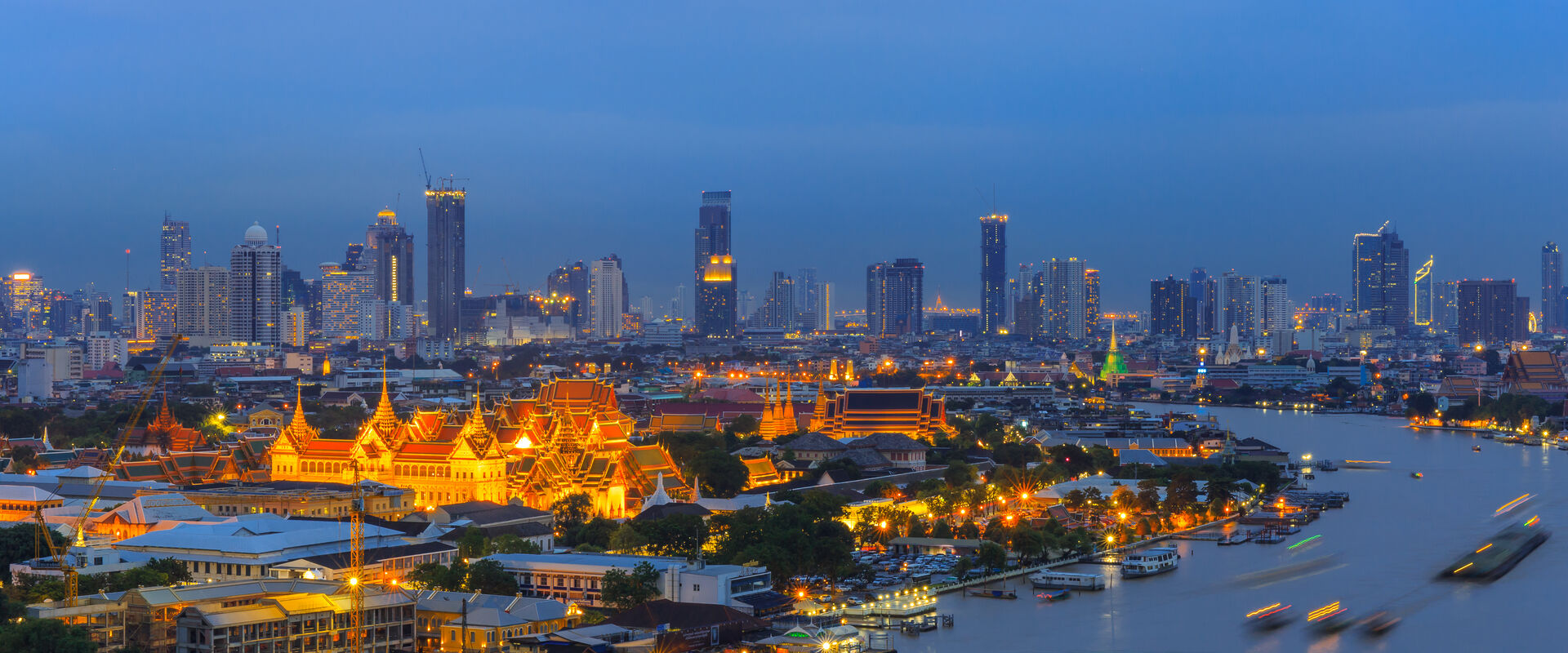
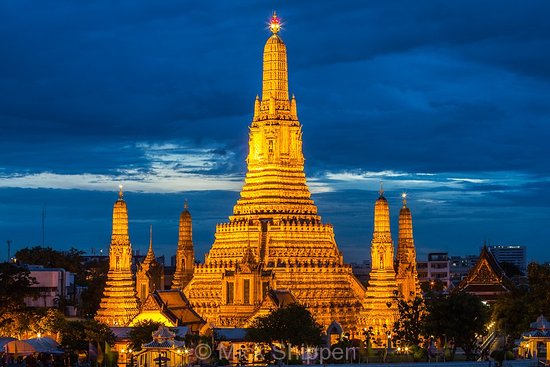
We are on the flight to Bangkok, Thailand, from Addis Ababa, Ethiopia and it is so long, but it’s okay because we are very tired and are sleeping pretty much the whole way through the 9 hours and 15 minutes. When we finally made it, which was around 1:25 pm, we wanted to go as fast as we could to get our bags and go on our one day adventure to Thailand. We straight away found a taxi and from Bangkok we drove to Nonthaburi. We had around a 22 minute drive where we had some chill time before the challenge began. Once we got to Nonthaburi we were told we had to go and do something nice for two different native Thai people, and this was pretty difficult. The people around us all seemed so friendly and nice we didn’t know who to choose from. We finally chose two very nice families that we had given toys and money too and as they tried to give us something in return we knew that Thai people had a rule and in order to immerse ourselves in their culture we didn’t accept it. The custom in Thailand is typically to be kind and not expect anything in return and that is what we did. We had passed the challenge and were on to the next one. We had gotten a ride back to Bangkok. In Bangkok we were dropped off in front of Wat Arun Temple, one of many in Thailand, but a beautiful sight to see. We saw it from the outside and wanted to go inside so badly, so we paid the entrance fee and entered. This kind of reminded us of sequent occupance, the reason for this it was a society that left its cultural imprint in this city. They had a giant Buddha that we all had taken pictures with and it was so big and beautiful that we couldn’t stop staring at it, it had mesmerized us. We spent two hours there looking around and trying to meditate and become like the Buddha. It was great and a wonderful experience we had all enjoyed and benefited from. We had also realized that we were in Thailand and had been in front of a Buddha. This wasn’t where the Buddha had been thought of or created and we realized that their culture and religion was based off and affected by the Buddhist culture. They weren’t an authentic culture, but they had many beliefs and customs that they had built on their own. We had so much fun when we saw that our next challenge was a game that none of us knew and that we had to learn and beat a native Thai person in. It was truly a challenge! It took us around 1 hour until we started to get the hang of it. We beat the native Thai’s and said our goodbye’s. It was so fun because it was a part of the culture that I thought I would never experience and would never have learned about if we hadn’t taken this amazing trip to Thailand. It started to get later and our next challenge hadn’t been so hard because we had joined a group and traveled around Bangkok for 4 hours and visited places and sites that were very interesting. We saw the culture in Bangkok, Thailand through delicious food, sites and experiences we had enjoyed throughout the day. I had gotten late and our flight left early in the morning the next day so we had gotten a hotel room called Buddy Oriental Riverside. This was a very nice hotel and a nice room where we spent the night and had a good night’s sleep. We woke up the next day at 5:30am, we got around 6 hours of sleep, and we were off to the airport in order to catch our flight that left at 6:45am. It had been a hectic morning waking up getting ready, and going, but we did it and made it to the airport. We had checked our luggages in again and had gotten to the plane on time even a little earlier by 15 minutes. We waited and waited and got on the flight to Japan!!! We were so excited and couldn’t wait to get on the plane, get some more sleep and get to one of the most interesting states, Japan!!!
Signs And Info: Thailand Map - Stock Illustration I4297314 at ...
Travel Guide Bangkok - Plan your trip to Bangkok with Travel by ...
City Of Bangkok
Temple Of Dawn (Wat Arun) (Bangkok) - 2020 All You Need to Know ...
Wat Arun Temple


Research

Culture:
  • Thailand has a very rich tradition and they are very influenced by places like India, Cambodia, China, And Southeast Asia.
  • In Thailand their Theravada Buddhism is the national religion, where they worship ancestors and are animistic.
  • They have many cultural norms that tourists don’t completely understand, for example pointing with your feet which is disrespectful because it’s the dirtiest part of the body, and touching the head is disrespectful because it is the most sacred part. Another thing is when entering a temple your shoes must be removed.
  • They also have very interesting food that many enjoy because they blend many flavors together to make it perfect and delicious.
  • Take your shoes off when entering a temple, someone's house or a store where you can see shoes lined up outside. 
  • Dress modestly because it is disrespectful to the Thai’s. They wear clothes that cover and when swimming for example where shirt and shorts not a bathing suit.
  • Keep calm because Thai’s are generally very calm and don’t make a very big scene with situations because they channel the philosophies of the mai pen rai which translates to no worries or no problem. 
  • Don’t ride an elephant because they are a big part of the history in Thailand and many are mistreated and are mentally and physically abused. 
  • They have many holidays but one special one is of the king's wife's birthday which they call mother’s day because they see her as the mother of all Thai’s.
  • Another holiday they celebrate is called Loy Kratong which is not celebrated everywhere, but is the celebration of the water goddess and for providing water all year long.
  • The youth in Thailand are social in school, enjoy movies and television as a main source of entertainment. Favorite sports are soccer, table tennis, badminton, and volleyball. They also play Mahruk, a game almost like chess and watch Muy Thai which is Thai boxing. 
  • Many children are not allowed to have friends of the opposite sex because of the parents not allowing it. Females and males are mostly not around each other and holding hands until later in life when they get married. 
  • Oftentimes many Thai families live together amongst generations of the family, they enjoy family time and play games.
  • They greet each other with wai which is when they press their palms together and bow.
  • They try to live with jai yen which is a cool heart which means they typically don’t express extreme emotions.
  • Namjai is when families go together and express generosity without expecting anything back. 
  • They also respect elderly people way more because they are higher in status which means they deserve more respect.
  • Thai people will tend to think of others before themselves because it is an important part of their belief.
  • Ma bhen rai means never mind which is what they say to cool situations down in order not to get into an argument in public. They care about the argument but don't want to fight in public which means they are very respectful.
  • They have a belief called the “middle way” which means that they shouldn’t express too much negative and too much positive. Sometimes it may seem like Thai people don’t care and aren’t passionate about what they are doing at the moment, but this is a part of their culture and the “middle way”.
  • When they eat they typically sit around the table with their families, have a bowl of rice and more in the middle.
  • Status is very important to the culture in Thailand because it sets their status in society. This can change depending on if someone's life changes. Wai is a greeting and is modified based on the status of the person you are greeting.
  • Many Thai people wear amulets or carry talismans. This is because they have a strong belief in spirits and ghosts, they also have shrines for spirits everywhere. 
  • The Thai’s are technically prohibited to attach themselves to material objects because it is against Buddhism, but they make exceptions for the amulets and talismans.
  • Monks are highly respected in Thailand and in Thai culture.
Fact Sheet:

Race Destination #:  3
Country Visited: Thailand 
Country Shape Classification: fragmented shape and elongated.
Country Development Classification: Thailand is classified as a developing country. 
Specific Places Within Country Visited: Bangkok, Nonthaburi and Wat Arun Temple, 

Country Capital City: Bangkok    Capital City Population: 8.281 Million
Country Government Type: Unitary State, Parliamentary system, constitutional monarchy, military dictatorship, and military junta.
Current Leader(s) / Party(s): General Prayut Chan-o-cha is the current prime minister of Thailand.
Ethnicities (% breakdown): Thai - 91.5%, Khmer - 2.3%, Malay - 2.1%, Bamar - 1.5%, Karen - 0.6%, Chinese - 0.4%, Hmong - 0.3%, Other - 1.3%.
National Language(s): Thai is the official language in Thailand.
Religion(s) practiced  (% practiced): Buddhism - 93.58%, Islam - 4.94%, Christianity - 1.20%, Other - 0.11, Irreligious - 0.07%, Hinduism - 0.06%, Sikhism - 0.02%, Confuscism - 0.02%.

Traditional Cuisine Descriptions: Pad Thai - fried noodle dish with tofu eggs and more, Som Tam - Papaya salad, Khao Pod Tod - Corn cake, Gka Prow Gai - Basil Chicken
Traditional Dress Descriptions: Chut Thai - bright and delicate dresses the literal translation is Thai Outfit, Suea Phraratchathan - button up shirt with collar long sleeves and sash for formal meetings, Chakkri - dress.
Famous sites of country: Railay Beach, Koh Phi Phi, The Grand Palace in Bangkok, Sunday Walking Street, Chiang Mai, Pai, Wild Elephants in Khao Yai National Park, Sukhothai Old City, City of Ayutthaya, Doi Suthep, Climbing at Tonsai Beach, Khao Sok National park, Maruekhathaiyawan Palace, etc.

Country Population (most current available): 69.43 Million as of 2018
Country Population (in 1900): 10 Million people as of 1900

Average Life Males: 71.8    Females: 79.3
National Unemployment Rate: 0.67% as of 2018 a 3% rise from 2017 
Country Literacy Rate: 92.87%
Country Murder Rate: 3.24% as of 2016
Crude Birth Rate: 10.153 out of 1,000 pop.     Crude Death Rate: 7.559 per 1,000 pop. as of 2017
National Infant Mortality Rate: 9.1 per 1,000 live births

FLIGHT INFO
Addis Ababa, Ethiopia to Bangkok, Thailand: 9 hours 15 minutes (nonstop): $2107.80 ($702.60 x 3)
Bangkok, Thailand to Tokyo, Japan: 6 hours 15 minutes (nonstop): $2068.20 ($689.40 x 3)

TRANSPORTATION INFO
Bangkok to Nonthaburi: 20 minutes ($2.16 USD)
Nonthaburi to Bangkok: 20 minutes ($2.16 USD)

SLEEP 
7 hours on flight to Bangkok, Thailand
6 hours of sleep in Bangkok at the Buddy Oriental Riverside hotel: ($80 USD)
On plane a little, but already slept before flight so not so much!!

CHALLENGES
Be kind don't take back (1 hour)($31.37)
Visit Wat Arun Temple (2 hours)($9.41)
Mahruk Challenge (1 hour)($0.00)
Bangkok Tour (4 hours)($206.91)

ALL WEBSITES FOR COUNTRY


Ethiopia

August 3, 2020


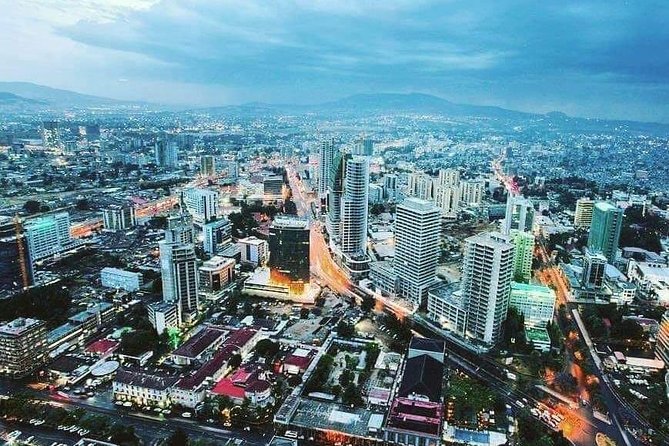
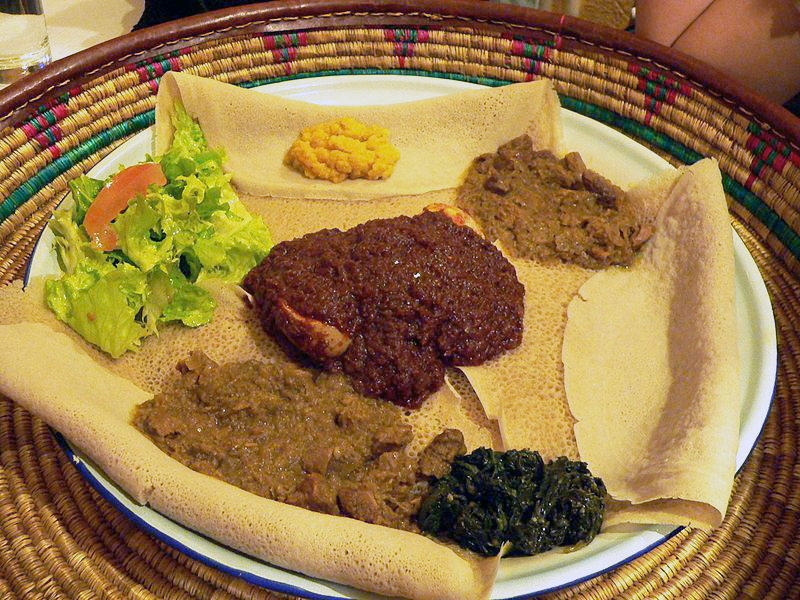
It’s day 2 of our Amazing Race and we are still on the flight to Ethiopia!! It's a very long flight around 14 hours and 20 minutes, but that's with one stop. It was a pretty good flight. We slept a lot like around 7-8 hours. It was an interrupted sleep because of the stops, but we slept on both flights, so it was okay. When we landed in Addis Ababa the capital of Ethiopia it was around 3:20 pm. This means we had less than half a day to do what we wanted in Ethiopia. So we got our bags as soon as we landed which took us around 20 minutes and we were on our way to our first challenge. We went to learn how to cook injera, this is one of the foods that you can find in every Ethiopian dish because they love it so much!!! It took us 4 hours quite a long time, but it was worth it the injera had turned out amazing. We tried to save it and have a bit, but it was just so good we ate it all. We had left Addis Ababa, the CBD or central business district of Ethiopia to go to Sebeta. On the way we saw that Addis Ababa is beautiful, but it has more poverty than expected. As we drove through Addis Ababa we were able to see a lot of how the city’s cultural landscape looked like. We saw many women with a cover over their head, which led us to believe that they were mainly an Islamic country. We had also seen a lot of life and happiness when we saw some native Ethiopians playing their traditional instruments that we later looked up to see that they were playing kebaro drums and a single stringed maseko which is closely related to a fiddle. After the 45 minute drive to Sebeta we finally made it. We paid the driver around $23.58 USD and had gone to our next challenge. We were supposed to run around the streets of Sebeta within an hour and greet as many people as we could that were wearing an amazing race sign. The reason this challenge had been so difficult was 1) Sebeta is pretty big and 2) in Ethiopia there are specific rules on how to greet someone depending on their gender and more. To greet a woman when you're a male you talk, when a male greets a male you shake each other's hands and you do so with your right hand. Ethiopians find it disrespectful to use your left hand for anything other than your bathroom needs. We then walked from where we were in Sebeta and enjoyed a traditional Ethiopian meal with native Ethiopians in a restaurant called Yod Abyssinia. As we sat we picked up a few customs that the Ethiopians had in their culture. It was kind of uncomfortable at first because we weren’t expecting it, but we sat down and they have this custom where the eldest at the table gets to eat first. Obviously we were okay with that. It wasn't uncomfortable, it was actually very interesting. Then came the uncomfortable part. Another custom that they have is called gursa. This is when the host or a native takes a handful of food and feeds it to the guests or visitors. It was crazy as we watched these handfuls of food come closer to our faces and into our mouths, very funny actually!!! We ate and ate until we couldn’t anymore. It was delicious, but sadly we had to go and get back to Addis Ababa and catch our flight to Thailand!! So we said thank you tipped the waiter a lot for being so great and left. We had crammed in another cab and were on our 45 minute journey back to Addis Ababa. We paid the cab once again and into the airport we went. Checked in our bags, and we made it around 30 minutes before the flight left at 12:10 am. We had such a great day in Ethiopia with all the challenges we had to do, all the food, and all the culture and customs we had immersed ourselves into on our very short trip. Finally we got on the plane and were off to Thailand, very excited!!!!!
Map showing Addis Ababa Sub cities (Source: Shapefile from ...
Amazon.com : Political Map of Ethiopia - Laminated (36" W x 35.17 ...
Half Day City Tour of Addis Ababa 2020
Injera - Wikipedia

Research
Culture:
  • The religions in Ethiopia are Ethiopian Orthodox Church, Islam, and others.
  • Religion controls almost everything in Ethiopia. 
  • Ethiopians are sociable people, they greet each other with three kisses on the cheeks, hand-holding between same-sex friends is a sign of affection, and more.
  • Only the right hand is used for eating and passing things around the table, and the left hand is used for going to the bathroom and is thought of as dirty so therefore not used when eating.
  • When they visit a monastery or a church women must be wearing a headscarf and also must be covering their arms and legs. 
  • Some monasteries and or churches only allow men.
  • Amharic is the official language in Ethiopia. Even though there are 80 other languages spoken within the country.
  • Family is very important in Ethiopia. Relatives and close friends are held close and are very important. Parents often live with their children in their older years. Family needs are usually put before any other matter.
  • They rely on a food called teff. They eat many foods that are made from this like injera which is like bread or a cake. They also eat stews called wats which are made up of vegetables and many meats like chicken, pork, lamb, etc. 
  • Music and dance is important in Ethiopia. They use instruments like kebaro drums, single-stringed masenko which is like a fiddle, washint which is like a flute, and beganna which is like a harp.
  • Ethiopians love to sing. 
  • Greetings in Ethiopia are important men exchange handshakes and talk about health. Women tend to not handshake but they speak loudly for greeting. With women and women they kiss cheeks three times.
  • They find it disrespectful to use the left hand for anything other than bathroom needs, so better not to exchange money or pass food with that hand.
  • It is customary for the oldest person present in a communal eating area to get the first handful of food.
  • They have a custom called gursa which means the host or one of the people use their hands to place a handful of food in the mouth of the guests or visitors.
  • When in churches or monasteries there are specific rules. If a woman is menstrating they don’t enter, if someone has had sex the night before or eaten before they should not enter. Women should wear clothing that covers but it is not a pressured rule anymore unlike how it used to be. 
  • Tipping is important because people have to tip specific people and are also discouraged to tip in other places and to other people.
Fact Sheet
Race Destination #:  2
Country Visited: Ethiopia 

Country Shape Classification: Geometric been called the “horn of Africa”

Country Development Classification: Developing Country
Specific Places Within the Country Visited: Addis Ababa and Sebeta. We went to different restaurants as well

Country Capital City: Addis Ababa   Capital City Population: 3,465,000
Country Government Type: Democracy, Parliamentary Republic, and Federal Republic
Current Leader(s) / Party(s): President = Sahle-Work Zewde, Prime Minister = Abiy Ahmed
Ethnicities (% breakdown): Oromo - 34.4%, Amhara - 27%, Somali - 6.2%, Tigray - 6.1%, Sidama - 4%, Gurage - 2.5%, 
Welaita - 2.3%, Hadiya - 1.7%, Afar - 1.7%, Gamo - 1.5%, Gedeo - 1.3%, Silte - 1.3%, Kefficho - 1.2%, Other - 8.8%.
National Language(s): 83 different languages with up to 200 different dialects, Amharic is the official language.
Religion(s) practiced  (% practiced): Ethiopian Orthodox - 43.5%, Muslim - 33.9%, Protestant - 18.5%, Traditional - 2.7%, 
Catholic - 0.7%, Other - 0.6%.

Traditional Cuisine Descriptions: Injera - is sourdough flatbread, Doro Wat - Chicken Stew, Kitfo - Ethiopian beef tartare.
Traditional Dress Descriptions: Gabbi and Netella are the main clothing they wear and some women wear Kemis with the 
Netella, and some other clothing is worn. They are dress-like clothing.
Famous sites of country: Simien Mountains, Rock-Hewn Churches of Lalibela, the Holy City of Harar, Gondar, Blue Nile Falls, 
Addis Ababa, Aksum, Arba Minch, Danakil Depression, etc. 

Country Population (most current available): 109,224,559 as of 2018 
Country Population (in 1900): 18,434 is the population in the 1900’s of Ethiopia

Average Life Males: 64 years old as of 2017     Females: 67.78 years old as of 2017
National Unemployment Rate: as of 2019 the unemployment rate is 1.79%
Country Literacy Rate: as of 2017 the literacy rate is 51.8%
Country Murder Rate: the murder rate is 21
Crude Birth Rate: 32.78 per 1,000 population              Crude Death Rate: 6.691 per 1,000 population
National Infant Mortality Rate: 39.1 per 1,000 population as of 2018

FLIGHT INFO
Tromsø, Norway to Addis Ababa, Ethiopia - 14 hours 20 minutes (2 stops): $1613.10 ($537 x 3)
Addis Ababa, Ethiopia to Bangkok, Thailand - 9 house 15 minutes (nonstop): $2107.80 ($702.60 x 3)

TRANSPORTATION INFO
Addis Ababa  to Sebeta: 45 minutes (20 kilometers): $23.58 USD
Sebeta to Addis Ababa: 45 minutes (20 kilometers): $23.58 USD

SLEEP
7 hours on flight to Addis Ababa, Ethiopia
7 hours on flight to Bangkok, Thailand 

CHALLENGES
Cooking Injera ($307.71)(4 hours)
Sebeta Greeting People ($0.00)(1 hour)
Authentic Ethiopian Dinner ($88.43)(1 hour)

ALL WEBSITES FOR COUNTRY


Norway

August 2, 2020

    It’s 11:59AM. We are all at O'Hare Airport, Chicago waiting to get onto the plane. Each one of us have our bags packed and are counting down the time to get on. It’s midnight. Only one minute left until we can start our journey! 3...2...1…. GO! We all run onto the plane that we rented out and the pilot takes off within minutes. We are on our way to Norway! Trosmø, here we come! A few hours into the flight, we all decide to go to sleep. Each of us got around 7 hours of sleep before we made our first stop. The time of the flight in total is around 14 hours. Each of us had to pay $1,476 for the plane ticket, resulting in a massive $4,428 altogether… yikes… Well, anyway, back to the trip. The flight was long, and a bit boring, but it all paid off in the end when we landed in Norway. When we landed, it was around 8:15PM in Norway because of the time difference. The first day was somehow almost already over! Well, we decided to walk out of the plane and to go get our luggage. This took around 15 minutes or so, and then we were out! We chose to go outside and explore the city of Trosmø a bit while waiting for our taxi. We started walking toward the CBD area of the city. It was really nice, with some nicely shaped buildings, and a lot of lights everywhere. We looked at our challenges for this country: we had to see the northern lights, and to make fish soup! This would be easy. As we walked around the CBD, we saw some of the memorials for the vikings that used to be dominating the waters of Norway. The people walking on the streets were all wearing the bunads we were researching, and they looked nice. We told our taxi to pick us up at a certain corner of town. Luckily, we heard that the northern lights were out that night. We all crammed into the tiny taxi, and told the driver to take us to Ersfjordbotn Village. On the way there, during the 18 minute drive, we peered our heads out the window, and surely enough, there they were - the northern lights! They were beautiful. The lights reflected in the misty water that we were passing by. It was truly a nice sight. Each of us snapped a clear photo of them to ensure that we secured the challenge. Half of the challenges were already done. On the drive, we also saw some kids playing football in a field, one of the major local sports. When we arrived in Ersfjordbotn, we looked around for a restaurant on Google Maps that sold Norwegian Fish Soup, or referred to as Fiskesuppe by the locals in the area. We went into a restaurant called Bryggejentene AS and paid 50$ to the head chef to teach us how to make the special soup that we were searching for. This took around 30 minutes in total, but it was totally worth it! The fish soup was amazing. We finished our challenges, and it was only 10:30PM. We had a 12:00AM flight scheduled, so we were a bit ahead. We figured that we might as well explore a bit more of Trosmø when we got to the area. We took the 18 minutes drive back in the taxi, and when we got there, we decided to wander the city some more. When we got back to the city, we noticed how little low order functions the city offered. The smaller the city, the less low order functions there are. We were passing by some people walking, and they started telling us about the hidden economy there. The hidden economy consisted of work and labor, and it was a bit uncontrollable. We looked around some more in the city and saw the various ferry trips closing in on their final trips in the water. This city was beautiful. We started to walk back to the airport and just managed to catch our flight on time. Ethiopia, here we come!

Week 19: Sweden | Norway sweden finland, Sweden travel, Norway map
Tromso Northern Lights City Break | Norway | Discover the World
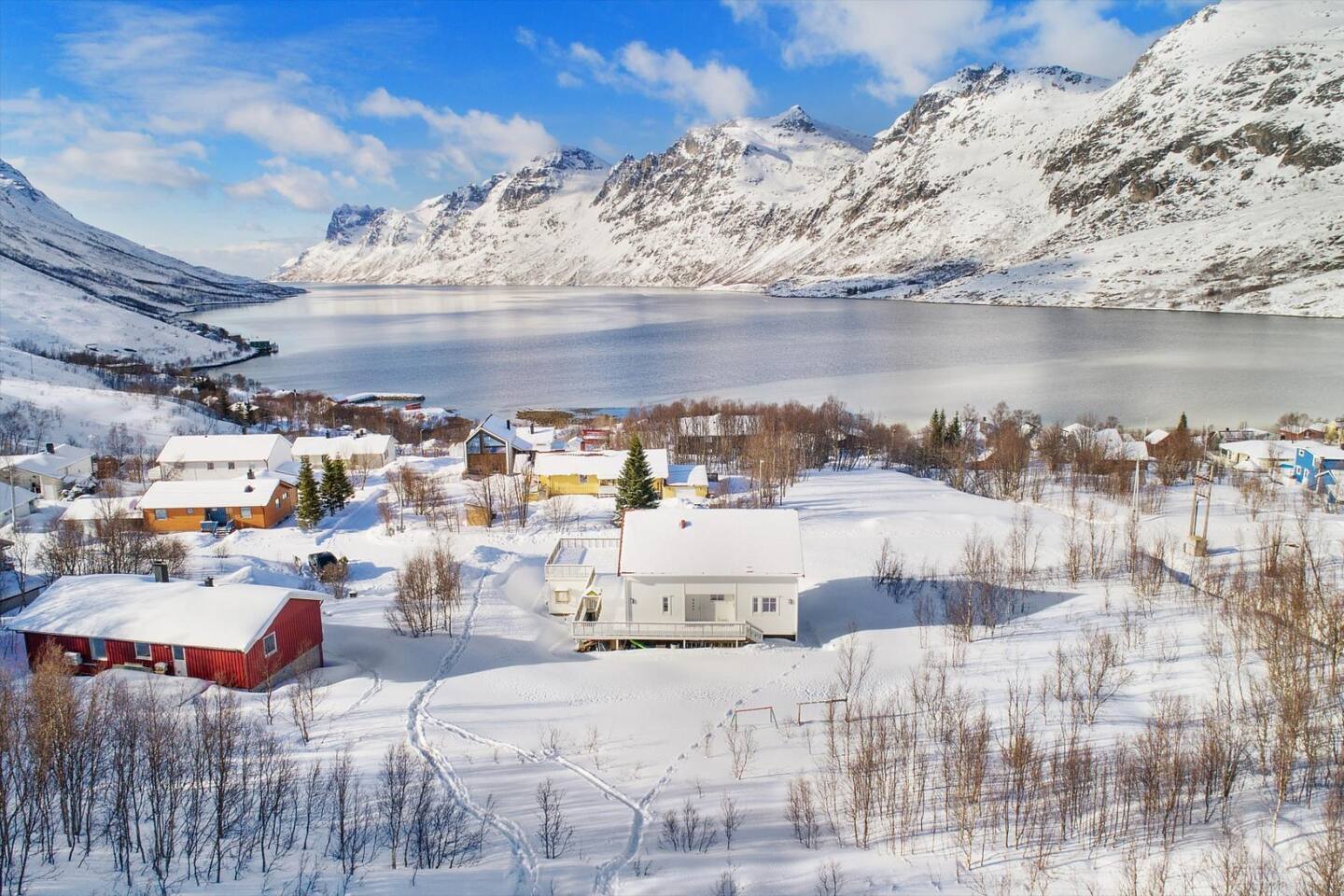
Quality apartment in Ersfjorden, Tromsø - Apartments for Rent in ...

Research

Culture:

- Norway’s past revolved around Vikings. A lot of the people in this country identify with rural culture.
- They eat a lot of seafood
- Inhabited by nomadic cultures
- Very into folk music, particularly the fiddle
- They wear bunads. Both men and women do.
- Religions include Oromo, Amhara, Somali, Tigray, Sidama, Gurage, Welaita, Hadiya, Afar, Gamo, Gedeo, Silte, and Kafficho
- Some foods include: Brunost - Brown Cheese, Sjømat - Seafood, Fiskesuppe - Norwegian Fish Soup
- They speak many variations of Norweigan
 - Johan Christian Dahl, Kitty Kielland, and Harriet Backer are some of the famous artists there.
- Norway is known for its excellent cinema industry
- Association football, ski jumping, and biathlon are some of the most popular Norweigan sports
- Norweigein families usually don’t contain more than 2 children.
- Boys and girls equally inherit the property of their parents
- Men and women have equal rights
- Norweigeins respect each others’ dignity

Fact Sheet:

Race Destination #: 1
Country Visited: Norway
Country Shape Classification: Elongated, has one of the world’s longest and most rugged coastlines in the world
Country Development Classification: Developed country
Specific Places Within Country Visited: Ersfjordbotn Village, Helgeland

Country Capital City: Oslo   Capital City Population: 681,067
Country Government Type: Parliamentary Constitutional Monarchy
Current Leader(s) / Party(s): Prime minister: Erna Solberg, Conservative
Ethnicities (% breakdown): 83.2% Norweigan, 8.3% other European, 8.5% other
National Language(s): Bokmål Norwegian and Nyorsk Norweigian. Some people use Sami and/or Finnish languages.
Religion(s) practiced  (% practiced): Church of Norway: 70.6%, Muslim 3%, Roman Catholic 3%, other Christian 3.7%, other 2.5%, unspecified 17%
Traditional Cuisine Descriptions: Brunost - Brown Cheese, Sjømat - Seafood, Fiskesuppe - Norwegian Fish Soup, 
Traditional Dress Descriptions: Women normally wear bunad, which is a double-shuttle woven wool skirt or a dress. Men wear bunad too, but it is normally a three piece suit with embroidered colors.
Famous sites of country: Sognefjord, Pulpit Rock, Tromsø, Lofoten Islands, Viking Ships Museum, Oslo, Bygdoy Peninsula, Bryggen Hanseatic Wharf, Bergen, Tromsø's Arctic Museums, 
Country Population (most current available): 5.368 million
Country Population (in 1900) 2.231 million
Average Life Males 79.8 years     
Females: 83.7 years
National Unemployment Rate: 3.5%
Country Literacy Rate: 99%
Country Murder Rate: 0.51 
Crude Birth Rate: 11.099 per 1,000 population Crude Death Rate: 9.893 per 1,000 population
National Infant Mortality Rate: 1.921 per 1,000 births

FLIGHT INFO
Chicago to Tromsø - 14 Hours (2 Stops): $4428 ($1476 x 3)
Tromsø to Addis Ababa - 14 hours 20 minutes (2 Stops): $1613.10 ($537 x 3)

TRANSPORTATION INFO
18 mins to and from Tromsø and Ersfjordbotn ($6)

SLEEP
7 hours on flight to Tromsø
7 hours on flight to Addis Ababa

CHALLENGES
Learn from a local in Ersfjordbotn Village how to make Fiskesuppe, the Norweigan fish soup. (LOCATION: ERSFJORDBOTN VILLAGE)
Visit the Arctic Circle at night and get a photograph of either the Northern Lights or a cool mountain formation. (LOCATION: Helgeland)


ALL WEBSITES FOR COUNTRY
https://globaledge.msu.edu/countries/norway/government
https://www.investopedia.com/updates/top-developing-countries/
https://worldpopulationreview.com/countries/norway-population/
https://www.indexmundi.com/norway/religions.html
https://www.2foodtrippers.com/norway-food-favorites/
https://www.britannica.com/topic/bunad
planetware.com/tourist-attractions/norway-n.htm 
https://www.lifeinnorway.net/life-expectancy/
https://tradingeconomics.com/norway/unemployment-rate
https://www.macrotrends.net/countries/NOR/norway/literacy-rate
https://www.macrotrends.net/countries/NOR/norway/murder-homicide-rate
https://www.macrotrends.net/countries/NOR/norway/birth-rate
https://www.macrotrends.net/countries/NOR/norway/death-rate
https://www.macrotrends.net/countries/NOR/norway/infant-mortality-rate
https://www.tripsavvy.com/culture-of-norway-illustrated-1626653
https://www.worldatlas.com/articles/the-culture-of-norway.html